
All of this was pulled from the Byblos live feed - 1,400+ VC firms, 60,000+ newsletters, one place.
See what else came in today at byblos.digital →
Go premium. $10.99/month or $109/year, with a 7-day free trial. You get the full intelligence layer:
Exclusive research from our database of 1,400 investors and 60,000 newsletters
Weekly briefs on where capital is actually moving
Direct 1:1 access to us
I’ve been thinking about how the most important shifts rarely arrive as headlines. The venture firms we tracked this week stopped agreeing on whether AI spending is something to celebrate or something to survive — and that disagreement matters more than any single number in it.
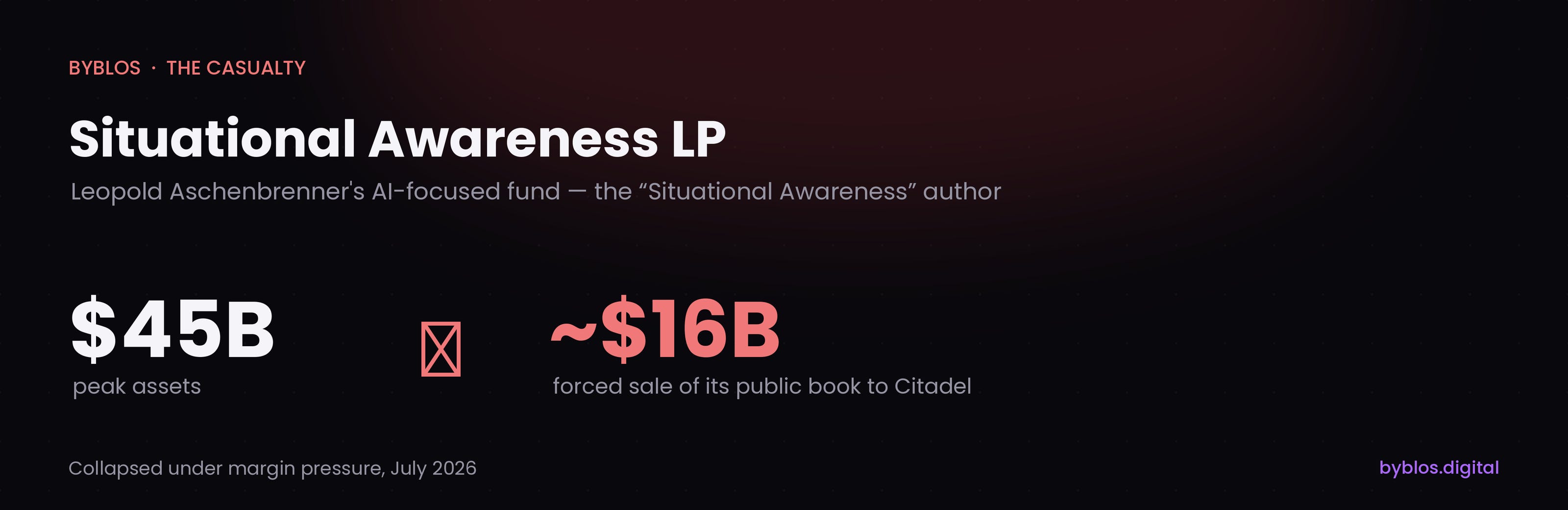
Let me start with the event that made it concrete. Leopold Aschenbrenner — the author of “Situational Awareness,” the essay a good chunk of tech passed around last year — ran an AI-focused fund that reached $45 billion in assets. This week it collapsed under margin pressure and handed roughly $16 billion of its public book to Ken Griffin’s Citadel in a forced sale. I find these moments clarifying. Not because one fund failing predicts anything on its own, but because of how differently people wrote about it afterward.
Quick note. We launched on Product Hunt last week, and came 28th at 43 followers and 22 upvotes. It was a great experience for our team, and, while we believe we can do much more, I wanted to express gratitude for your support. Byblos App exists to take VC and market research off the plate for people who want to build more and better.
Tired of spending hours on investor research?
🟣 Sign up over here and get a free 7-day trial of all features
🟣 Get added to our Telegram group
🟣 Attend a 1:1 setup call with us
🟣 Receive free exclusive briefs from the 1,400+ VC database and use the app freely
The believers are still building the case for scale
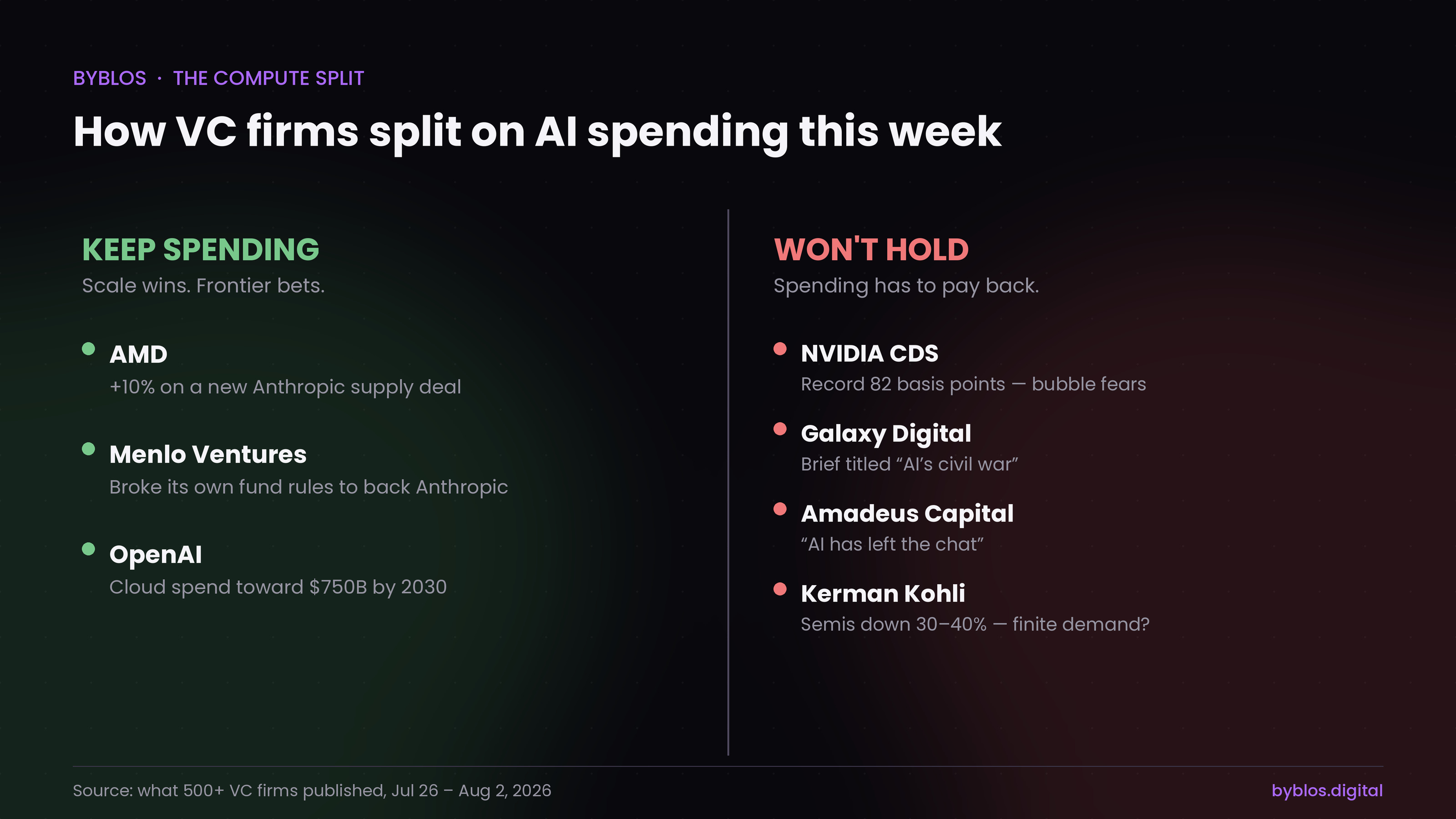
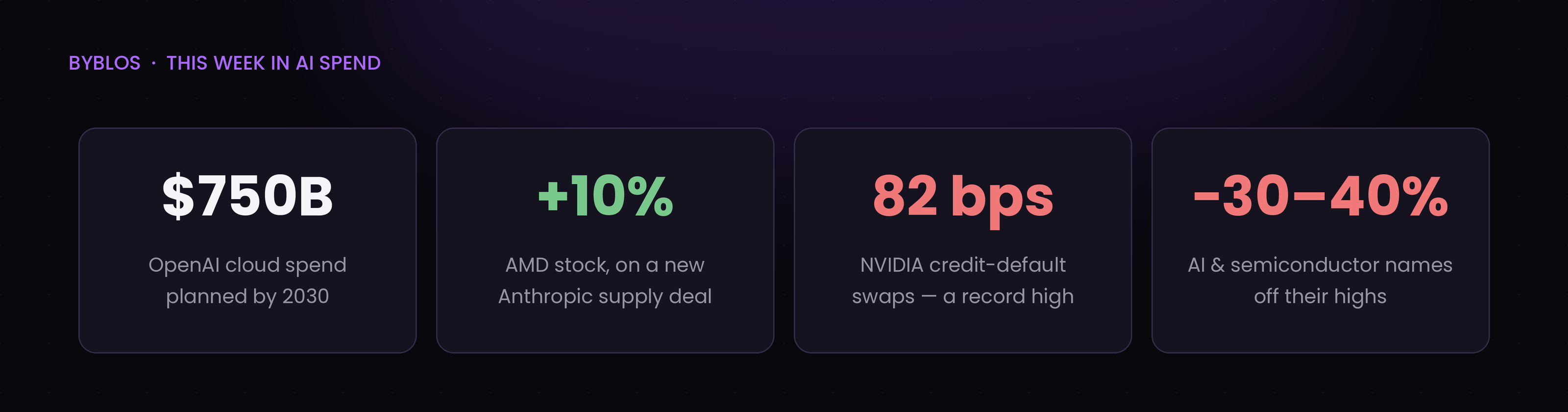
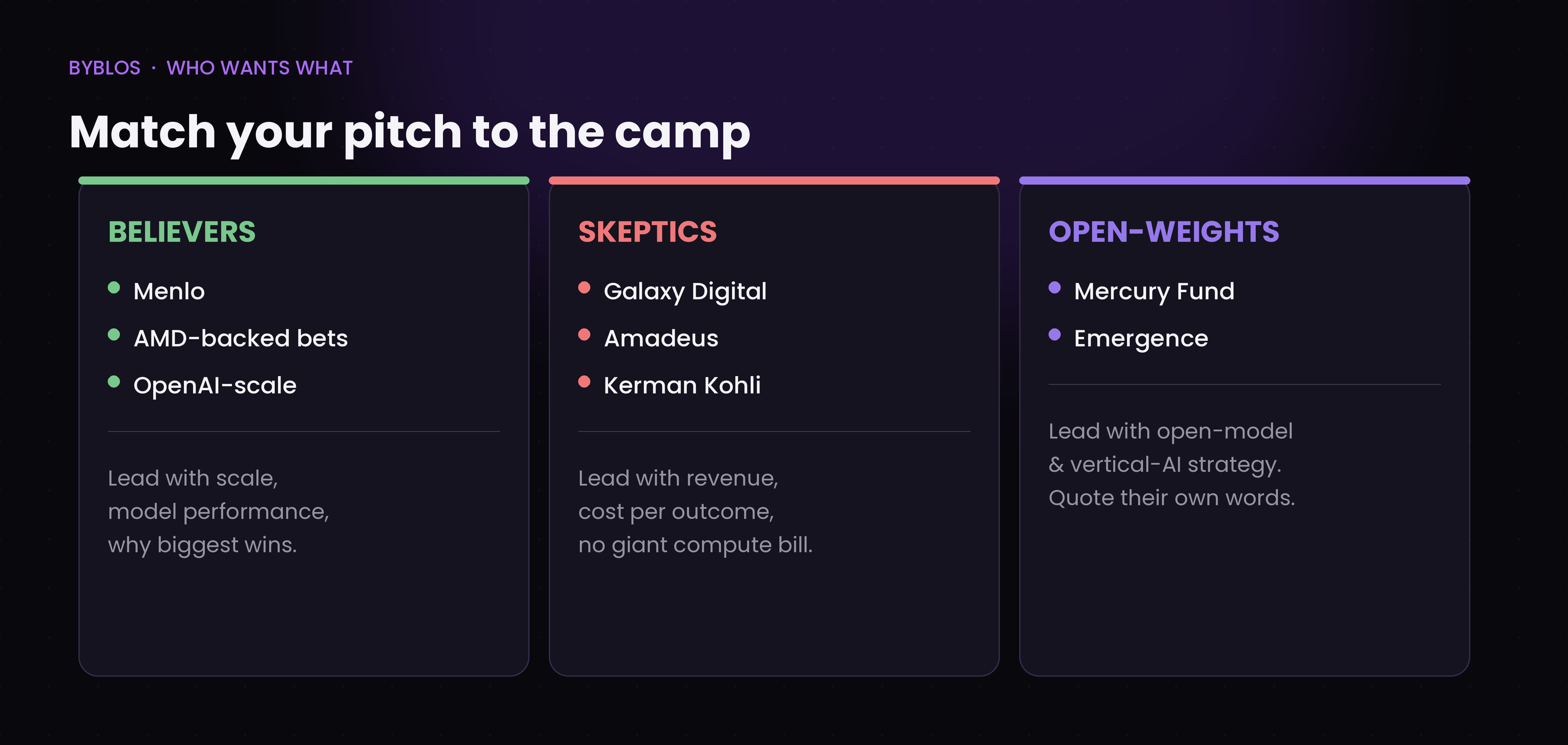
One group of investors spent the week reinforcing the idea that in AI, you win by spending. OpenAI moved to secure cloud spending toward $750 billion by 2030. AMD’s stock rose 10% on a new supply deal with Anthropic, which tells you the compute race is widening beyond a single chipmaker. And in the 20VC newsletter, Menlo Ventures described backing Anthropic after stepping outside its own fund rules — the benchmarks were strong enough that the burn didn’t matter. I understand the logic. If you believe the frontier is a land grab, then the compute bill isn’t a cost, it’s the entry fee. Founders pitching this group should lean all the way into ambition. These are people who want to hear that you intend to be the biggest.
The skeptics started asking for the math
At the same time, a different group turned quietly critical. The cost to insure NVIDIA’s debt hit a record 82 basis points as the scale of AI commitments raised real bubble questions. Galaxy Digital titled its research brief “AI’s civil war.” Amadeus Capital titled its newsletter “AI has left the chat” and moved its attention to the physical output of AI — drug discovery, materials science. Kerman Kohli asked, plainly, whether demand for compute is finite, noting that AI and semiconductor names had fallen 30 to 40% from their highs.
What strikes me is that none of these people are AI pessimists. They’re asking the oldest question in investing — does the money come back — and they’re asking it out loud for the first time in a while. A founder pitching this group with a story about out-spending everyone will lose them on the first slide. They want to hear about revenue, and about why your product works without a fortune in compute.
What we think this actually means
Here’s the implication we keep landing on, and it’s the part nobody is stating directly. The AI-spending debate isn’t really about AI. It’s about which founders still get funded on faith, and which now get interrogated on the numbers. And that line moved this week — not in an announcement, but in the accumulated tone of what these firms chose to write. The same company, with the same deck, is fundable by a smaller portion of the room than it was three months ago. If you’re mid-raise, you may have felt a meeting go colder than expected and not known why. This is part of why.
There’s a third group forming, too, for founders who fit neither camp. Mercury Fund wrote “Open Weights and the Era of Vertical AI.” Emergence Capital wrote “Open Weights Are a Bet on Autonomy,” describing a portfolio built on open models paired with proprietary data. Their wager is that the value settles not in raw scale but in open models applied to specific industries. If that’s your company, that’s your room, and it’s a room that barely existed as a distinct thesis a year ago.
The practical version
So what do you do with this. Before you pitch a fund, read what it published in the last month. It will tell you which of these three conversations that firm is having with itself right now. Bring a scale-and-ambition story to a believer like Menlo. Bring a revenue-and-efficiency story to a skeptic like Amadeus or Galaxy. Bring an open-model story to Mercury or Emergence, ideally in their own language. The pitch that wins one of these rooms will actively lose another.
Everything in today’s digest came from the Byblos live feed. The full newsletter archive, the VC directory, and tomorrow’s signal are all waiting for you at Byblos.digital - the investor interned, curated.
That’s the data. Now go build something.